What is the Glock Switch Ban?
On August 24, 2022, the ATF’s Final Rule 2021R-08F redefined “machinegun” to include standalone auto sears, making possession of an unregistered Glock switch a federal felony punishable by up to 10 years in prison. This administrative rule, not an act of Congress, instantly criminalized millions of small metal or polymer components.
The Legal Definition of a “Machinegun”
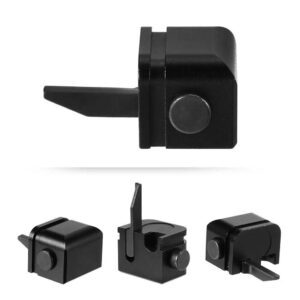
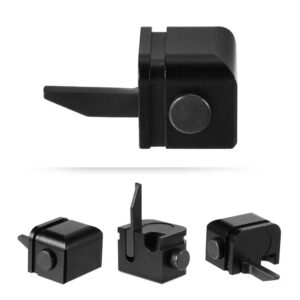
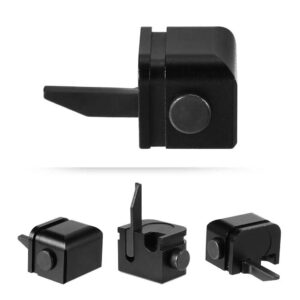
The National Firearms Act (NFA) of 1934 defines a machinegun as “any weapon which shoots, is designed to shoot, or can be readily restored to shoot, automatically more than one shot, without manual reloading, by a single function of the trigger.” For decades, this was applied to complete firearms or conversion kits. The 2022 rule expanded this to include “a part or combination of parts designed and intended solely and exclusively for use in converting a weapon into a machinegun.” This is the critical change. A Glock switch, like our G22 .40 S&W Auto Sear, is now considered a machinegun itself, even if it’s never been installed in a firearm. The ATF argues the part’s sole design intent is conversion, making it contraband. This interpretation bypasses the traditional “receiver” as the regulated firearm and focuses on a small internal component.
How the Ban is Enforced
Enforcement is aggressive and multifaceted. The ATF coordinates with postal inspectors (USPIS) and Homeland Security Investigations (HSI) to intercept shipments at international mail facilities and domestic distribution centers. They use electronic surveillance, undercover operations, and trace data from recovered switches used in crimes. Prosecutions often leverage 18 U.S.C. § 922(o), which prohibits possession of a machinegun made after May 19, 1986. Since all Glock switches are manufactured after that date, mere possession is a chargeable offense. They also use 18 U.S.C. § 924(c) for carrying a firearm during a crime of violence, which carries severe mandatory minimum sentences. If you’re building a Glock and need legitimate parts, ensure you’re sourcing from reputable vendors like Glockswitchforsale for your standard components.
State-Level Restrictions vs. Federal Law
Federal law sets the floor, but many states have their own, stricter bans. States like California, New York, New Jersey, and Illinois have laws explicitly banning “machinegun conversion devices,” “glock switches,” or “auto sears.” Penalties in these states can include state prison time on top of federal charges. Other states, like Texas or Arizona, may not have specific switch statutes but will enforce the federal ban through joint task forces. The key difference is prosecutorial discretion. A local DA might pursue state charges for faster sentencing, while the U.S. Attorney’s Office might take the case for federal prosecution with harsher penalties. It creates a complex legal landscape where crossing a state line with a component can change the severity of the charges. For compliant parts and accessories, our Glock Parts collection offers everything you need for legal builds.
Legal Alternatives and Parts You Can Still Own
It’s crucial to understand what remains legal. Standard Glock components—slides, barrels, recoil springs, connectors, and trigger housings—are completely unaffected by the ban. You can legally purchase and install aftermarket competition triggers, like those designed for the Glock 34, which provide a cleaner, lighter pull without enabling automatic fire. Extended magazines, like a 33-round magazine, are also legal in most states. The ban specifically targets parts whose “sole and exclusive” purpose is automatic conversion. Therefore, parts with a legitimate sporting purpose, such as a Glock OEM Lower Parts Kit for repairs, are perfectly legal. The line is drawn at intent and design. Glockswitchforsale provides a full range of these legal, high-performance components for enthusiasts and competitors.
Potential Legal Challenges and the Future
The 2022 rule is facing significant legal challenges that could reshape its future. Opponents argue the ATF overstepped its authority, effectively creating new law instead of interpreting existing statute—a power reserved for Congress. Cases may hinge on the “major questions doctrine,” which requires clear congressional authorization for agency actions of vast economic and political significance. Furthermore, the definition of “sole and exclusive” design is being contested. If a part could have any other plausible use, does it still qualify? The outcome of these cases, potentially reaching the Supreme Court, will determine if the rule stands. In the interim, enforcement remains in full effect. For builders, this means extreme diligence in sourcing parts and understanding that the legal status of any component is defined by its design and your intended use.
Can I own a Glock switch if I register it with the ATF?
No. The 1986 Firearm Owners’ Protection Act closed the National Firearms Act (NFA) registry to new civilian-owned machineguns. Any machinegun, including a switch, manufactured after May 19, 1986, cannot be registered by a private citizen. Only government agencies, SOT manufacturers/dealers with demo letters, or individuals possessing a pre-1986 registered transferable machinegun can legally possess new auto sears.
What happens if I’m caught with a switch I bought before the 2022 rule?
The 2022 ATF rule did not include a “grandfather” clause for possession. It is applied retroactively. If you purchased a switch in 2020 and possess it today, you are in violation of federal law. The ATF’s position is that the part was always a machinegun under the law; the rule simply clarified this interpretation. There is no amnesty or registration period. Continued possession is a felony.
Are 3D-printed switches treated the same as metal ones?
Yes, absolutely. The law and the ATF rule do not distinguish between materials. A 3D-printed polymer auto sear, a CNC-machined aluminum sear, or a hand-filed piece of sheet metal are all treated identically as “machineguns” if they are designed and intended to convert a semi-automatic firearm to fire automatically. The proliferation of 3D-printed designs has been a primary driver of the ATF’s increased enforcement focus.
Browse our glock switches collection
Last updated: March 27, 2026