Glock Switch vs FRT: The Real Breakdown
You’re looking at your Glock 19, wondering how to achieve a faster rate of fire. The two names you keep hearing are “Glock switch” and “FRT.” One is a direct, mechanical replacement part, and the other is a complex trigger mechanism. The performance and legal differences are stark, and choosing wrong has consequences.
Core Function: Mechanical Sear vs. Trigger Reset Trick
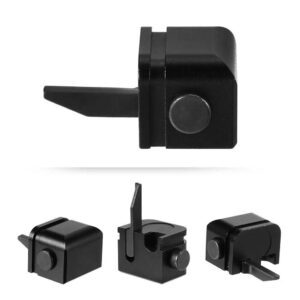
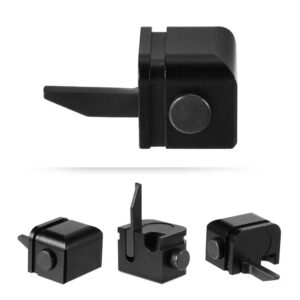
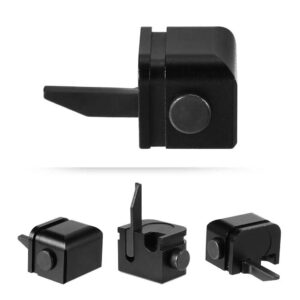
A Glock switch, like the G22 .40 S&W Auto Sear we stock, is a simple mechanical component. It replaces the factory rear plate on your slide and contains a spring-loaded sear. When installed with a modified or aftermarket selector, it physically catches and releases the striker on every shot cycle, enabling fully automatic fire. It’s a direct, one-for-one parts swap. An FRT (Forced Reset Trigger), however, is an entire trigger assembly. It uses a proprietary disconnector and spring system to force the trigger forward the instant a shot is fired, allowing for an extremely rapid *simulated* automatic rate of fire—as long as you maintain rearward pressure. It doesn’t modify the firearm’s fire control group to be automatic; it exploits the reset.
Legal Status: NFA Item vs. Regulatory Grey Area (For Now)
This is the critical divide. Under the National Firearms Act (NFA), a machine gun is defined by its ability to fire more than one shot with a single function of the trigger. A Glock switch meets this definition precisely. Possession of one, unless registered under the NFA before May 1986, is a federal felony. An FRT was designed to circumvent this by requiring a separate “function” (release and repull) for each shot, however minimal. The ATF has subsequently classified many FRT models as “machine guns,” leading to seizures and prosecutions. As of this writing, the legal battlefield is active, but the regulatory intent is clear. Relying on an FRT’s “grey area” is a significant legal risk.
Installation & Compatibility: Drop-In vs. Gunsmith-Level Fit
Installation complexity varies wildly. A quality Glock switch, such as our Universal Glock Auto Switch Kit, is typically a drop-in procedure for a competent end-user. It requires removing the factory rear plate and installing the switch assembly, often with no permanent modification to the frame or slide. Compatibility is model-specific (e.g., a Gen 3 G17 switch won’t fit a Gen 5). An FRT requires complete disassembly of the fire control group. You must remove the factory trigger, bar, disconnector, and springs, then install the intricate FRT system. Fitment is notoriously finicky, often requiring precise filing and adjustment to function reliably across different Glock generations and calibers.
Performance & Reliability: Sustained Fire vs. Simulated Bursts
In function, they deliver different experiences. A properly installed switch gives you true select-fire capability: safe, semi, and full-auto. The cyclic rate is mechanically determined, often around 1,200 rounds per minute. This demands robust supporting gear—think a Extended 33-Round Glock Magazine and a reinforced recoil spring. Reliability is high if the part is machined to spec. An FRT’s performance is entirely user-dependent. The rate of fire is limited by how fast you can cycle the forced reset. It creates a “binary” effect but is prone to malfunctions—like “hammer follow” or outrunning the reset—if your technique falters or the unit isn’t perfectly tuned. It’s a trigger skill amplifier, not a true autosear.
Cost & Longevity: Initial Outlay vs. Total Investment
Looking just at the sticker price is misleading. A Glock switch from a reputable source like Glockswitchforsale has a clear upfront cost. Its longevity is a function of material quality and maintenance; a steel sear will last thousands of rounds. The real “cost” is the legal responsibility of NFA compliance if you possess a pre-86 registered sear. An FRT often costs more initially. Its longevity is questionable due to the complexity of its internal springs and levers, which endure high-stress cycling. The greater cost is legal vulnerability. Investing in an FRT today could mean losing it to an ATF cease-and-desist tomorrow, with no recourse. For dedicated, legal automatic fire, the registered switch is the only definitive path.
FAQ
What is a switch for a Glock?
A Glock switch, or auto sear, is a small mechanical device that replaces the rear cover plate on the slide. When engaged, it intercepts and releases the striker with each shot cycle, converting the pistol from semi-automatic to fully automatic fire. It is legally defined as a machine gun under the National Firearms Act.
Is an FRT trigger illegal?
The ATF has officially classified several models of Forced Reset Triggers (FRTs) as “machine guns,” making their possession illegal without proper NFA registration. While legal challenges are ongoing, current enforcement treats them as contraband. Relying on their previous “grey area” status is a high-risk proposition.
Can a Glock switch fit any Glock model?
No. Switches are generation and model-specific. A switch designed for a full-size Glock 17 Gen 3 will not fit a compact Glock 19 Gen 5, nor will a 9mm switch work in a .40 S&W model without specific calibration. Always verify compatibility, like our Glock 26 Subcompact Switch for smaller frames.
What parts do I need to install a Glock switch?
At minimum, you need the switch assembly itself. A full, reliable conversion often also requires a selector lever, modified or extended safety plunger, and a reinforced recoil spring assembly. For a proper build, starting with a fresh Glock OEM Lower Parts Kit is recommended to ensure all supporting components are in spec.
Browse our glock switches collection
Last updated: March 27, 2026