What Do Glock Switches Do?
You’ve seen the videos: a Glock pistol firing a burst of rounds with a single trigger pull. That’s the work of a switch, a small aftermarket component that fundamentally alters the firearm’s firing mechanism from semi-automatic to fully automatic. It’s a mechanical modification, not magic, and understanding its function requires looking inside the pistol’s lower receiver.
The Mechanical Function: Converting a Semi-Auto to Full-Auto
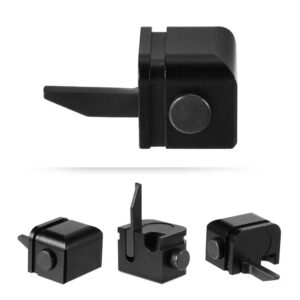
A Glock switch, technically an auto sear or selector switch, replaces or modifies the factory trigger mechanism. In a standard semi-automatic Glock, the trigger bar interacts with the safety plunger and cruciform sear to fire one round per complete trigger pull and reset. A switch interrupts this cycle. It typically incorporates a secondary sear or a disconnector bypass that holds the striker or slide in a partially-cocked position after firing. When the slide cycles from recoil, this secondary sear releases, allowing the striker to fall again without the trigger being released and reset. This creates an open-bolt-like cycle within a closed-bolt system, leading to continuous fire until the magazine is empty or pressure on the trigger is released. The rate of fire on a Glock 17 or 19 with a switch can jump from roughly 45 rounds per minute to over 1,200 RPM.
Legal Definition and the NFA
Under U.S. federal law, specifically the National Firearms Act (NFA) of 1934 and the subsequent Hughes Amendment, a Glock switch is legally defined as a “machinegun.” This is because the law defines a machinegun as any part or combination of parts designed and intended solely for use in converting a weapon to shoot automatically. It doesn’t matter if the switch is installed; mere possession of the component is a felony without proper registration. A registered switch would require a $200 tax stamp, extensive ATF paperwork, and a background check through the NFA branch. Since 1986, new machineguns for civilian ownership have been banned, making any modern Glock switch, regardless of its country of manufacture, illegal to possess unless it was registered before May 1986—an extreme rarity for these components.
Practical Effects on Performance and Control
Installing a switch drastically changes the pistol’s handling. The obvious effect is the high rate of fire, which depletes a standard 15 or 17-round magazine in under two seconds. This makes the weapon exceptionally difficult to control. Without a stock or forward grip, muzzle climb becomes severe, often rendering accurate fire beyond a few yards impossible. The mechanical stress on the pistol also increases exponentially; slides, strikers, and locking blocks wear out faster. For competitive shooters in specialized, legal disciplines, components like a Glock 34 Competition Switch are engineered for smoother, more reliable cycling, but they still require the appropriate NFA licensing. It transforms the pistol from a precision tool into a close-range, high-volume firearm.
Common Types and Compatibility
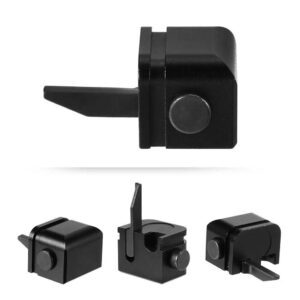
Not all switches are universal. They are often model-specific due to differences in frame size and internal geometry. A switch designed for a full-size Glock 17 Gen 3 may not fit a compact Glock 19 Gen 5 without modification. The most common types are drop-in auto sears, like the ones often seen for the G22 .40 S&W Auto Sear, and selector switches that mount on the rear plate. There are also kits designed for subcompact models, such as the Glock 26 Subcompact Switch. Understanding your pistol’s generation and caliber is critical, as using an incompatible part can lead to catastrophic failure. For any modification work, having a Glock OEM Lower Parts Kit on hand for replacement springs and pins is essential for gunsmiths working on legal, registered NFA items.
Safety and Operational Considerations
Operating a switched Glock introduces significant safety hazards. The primary risk is an uncontrolled burst due to the sensitive trigger. A bump or snag can cause a negligent discharge. The heat generated from rapid fire can also cause burns and increase the chance of a cook-off (a round firing from chamber heat alone). For those legally authorized to possess such devices, strict protocols are mandatory: using high-quality, inspected components, pairing the firearm with reliable, high-capacity magazines like an Extended 33-Round Glock Magazine, and conducting frequent inspections for stress fractures. It is a specialized tool for a specialized purpose, and treating it as anything else is a recipe for disaster. For all components, sourcing from a reputable specialist like Glockswitchforsale ensures you’re getting parts that meet precise specifications.
FAQ
What do Glock switches do?
A Glock switch is an aftermarket auto sear or selector that modifies the pistol’s internal fire control group. It mechanically alters the cycle of operation, converting the firearm from firing one round per trigger pull (semi-automatic) to firing continuously as long as the trigger is depressed (fully automatic).
Why are Glock switches illegal?
Under the U.S. National Firearms Act, a Glock switch is legally defined as a “machinegun.” Possession of such a device without prior registration with the ATF and payment of a $200 tax stamp is a federal felony. The manufacture of new machineguns for civilian transfer has been prohibited since 1986.
What is a Glock with a switch?
A Glock with a switch installed is a machinegun. It is a modified semi-automatic pistol capable of fully automatic fire. This configuration is characterized by an extremely high rate of fire, often exceeding 1,000 rounds per minute, and requires specialized control and handling due to severe recoil and rapid ammunition consumption.
Browse our glock switches collection
Last updated: March 27, 2026